Evans Jones LLC — Surveyors

Jump to main menu or contact information.


You are in: Home / Articles / 2008 / 12 / 03 / Garden Grabbing vs Green Belt

Garden Grabbing vs Green Belt

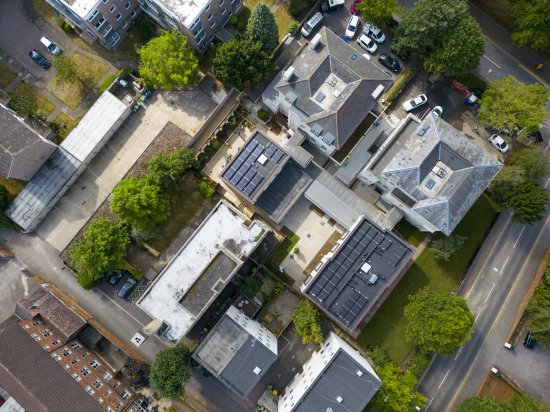
Local authorities across the country are grappling with the thorny issue of what is emotively termed ‘garden grabbing’ - the development of larger rear gardens within often high density residential development. Residential gardens are currently classified as previously developed land and thus are subject to the same polices which govern the development or re-development of Brownfield sites.

The Government objective is for 60 percent of new development to be sited upon previously developed Brownfield sites. The adopted policy within Cheltenham seeks 80 percent of new development upon Brownfield sites.

The Government does not collect accurate statistics on the amount of development on garden sites, however, in the debate on the proposed amendment to the Planning Bill last week, it was reported (from an unsubstantiated source) that 72 percent of all Brownfield site development is on back gardens. The statistics held by the Department of Communities and Local Government show that in England the amount of development on previously developed land as a percentage of all new housing, including back gardens is 26.9 percent. The statistics do not differentiate between types of Brownfield site, garden or industrial; it is thus impossible to draw any firm conclusion as to whether the development of rear gardens is actually problematic.

Within Cheltenham, the percentage of new homes built on rear gardens as a percentage of all Brownfield development is not known.

David Jones Head of Planning at Cheltenham based architects and planning consultants, Evans Jones LLP confirmed:

“Local Authorities have a difficult balancing act to perform. Local and national planning policies encourage local authorities to make best use of previously developed land within the built-up boundaries of towns and cities. In contrast, local residents often vehemently oppose the development of rear gardens.

Whilst being sympathetic to those residents who have enjoyed the luxury of a large rear garden, in practice local authorities must choose between developing rear gardens or allocating new Greenfield sites.

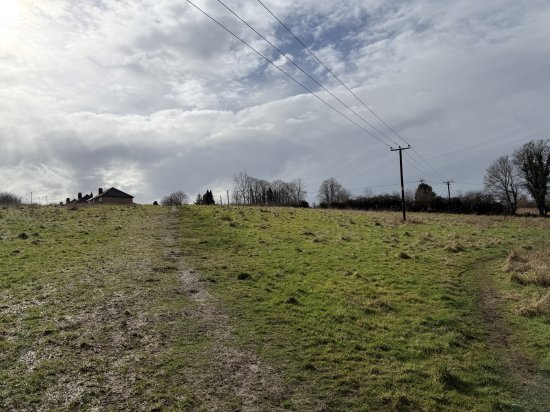
Cheltenham is surrounded by large swathes of Green Belt and Areas of Outstanding Natural Beauty which residents also wish to see protected from development. Whilst the residents of Cheltenham may wish to protect the town from any new development, resisting all development is not a viable option. During the last local plan review the local authority failed to allocate sufficient land to meet the town’s anticipated employment needs, preferring instead to place a moratorium on the redevelopment of sites currently or last in employment use. This has undoubtedly increased the pressure for the development of rear gardens whilst many employment sites lay vacant, to let and/or underused.”

From an employment land view point Cheltenham has lost out to its neighbours who are far more proactive in allocating appropriate sites for high quality commercial and industrial buildings, meeting the needs of business. Cheltenham’s policies seeking to encourage businesses to re-use redundant employment sites may seem a worthy goal, however in practice businesses will simply seek out better accommodation elsewhere. This will ultimately be to Cheltenham’s detriment as more businesses move away from the town.

The Borough Council is required to maintain a five year supply of housing land (land with planning permission which is deliverable within five years). Two separate appeal Inspectors determining planning appeals at Glenfall Way (October 2008) and 84 Little Herberts Road (June 2008) concluded that Cheltenham Borough Council is not able to demonstrate a robust five year supply of housing land.

David Jones commented:

“Set against mounting evidence that the Borough Council cannot demonstrate a robust housing supply, the pressure to develop, increases yet further. Decision makers must therefore choose between allowing some development within rear gardens in locations which are sustainable and do not cause harm to neighbouring amenities, or allocate additional Greenfield sites in the countryside surrounding Cheltenham.

Development pressure within Cheltenham will still require the allocation of some Greenfield sites for new commercial and residential development, however, the extent of such allocations can be minimised by making best use of all previously developed land.”

David Jones is a Chartered Surveyor and Senior Planning Partner at Evans Jones LLP. David has been a partner since 1990.

Evans Jones submits planning applications and handles planning appeals on behalf of land owners and developers.

About This Entry

‘Garden Grabbing vs Green Belt’ was posted by Karyn Middleton on 3rd Dec ’08 at 14:45 UTC and filed under , , , , .

Post A Comment

Required fields are in bold

Line breaks will be converted to paragraphs. Include ‘www’ to display a link.

Top

Browse press releases

January 2009

SMTWTFS
Dec Feb
    123
45678910
11121314151617
18192021222324
25262728293031